The global authentication market is experiencing strong momentum in 2025 as businesses, governments, and consumers demand higher levels of digital security. With cyber threats becoming more advanced and digital transactions increasing across industries, authentication technologies are no longer optional—they are essential. In the middle of this transformation, Authentication Market Insights highlight how identity verification has evolved from simple passwords to intelligent, multi-layered security systems. Organizations are now prioritizing secure, user-friendly authentication to protect data, comply with regulations, and build digital trust.
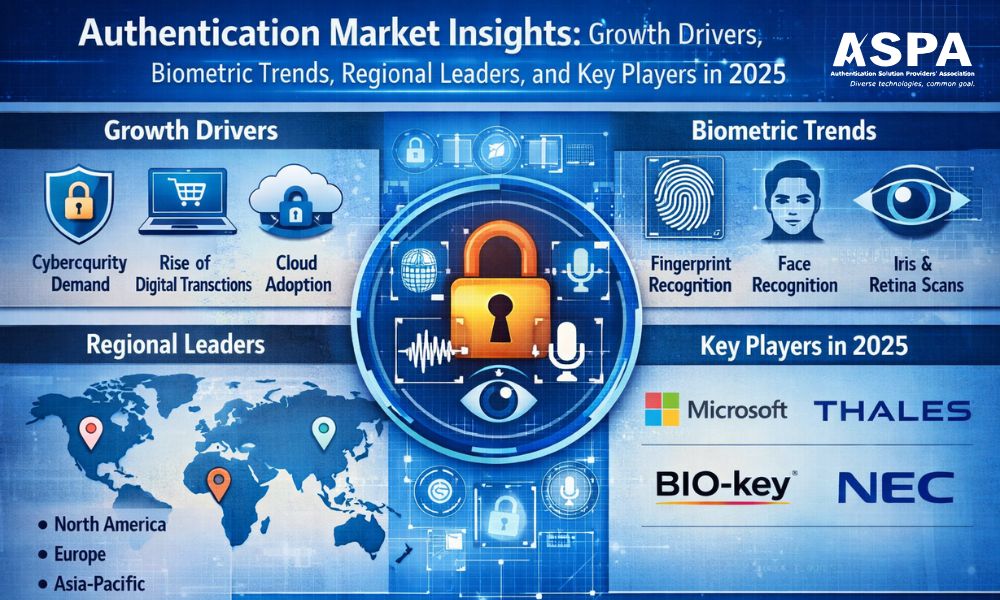
What Is Driving the Rapid Growth of the Authentication Market in 2025?
Several powerful factors are accelerating the growth of the authentication market this year. These drivers are interconnected and reinforce each other across sectors such as banking, healthcare, e-commerce, and government.
Key growth drivers include:
- Rising cybercrime and data breaches
Phishing, ransomware, and identity theft incidents are increasing globally, forcing organizations to strengthen access control. - Expansion of digital services
Online banking, digital payments, e-governance, and remote work require secure identity verification. - Regulatory compliance pressure
Data protection laws are pushing companies to adopt stronger authentication mechanisms. - Growth of cloud and IoT ecosystems
Cloud platforms and connected devices need continuous and secure user authentication. - User demand for convenience
Customers expect fast and frictionless login experiences without compromising security.
In 2025, authentication is no longer just an IT function—it has become a core business enabler that supports growth, customer confidence, and brand reputation.
How Is Biometric Authentication Reshaping Digital Security?
Biometric authentication is one of the most influential trends reshaping the authentication market. Unlike traditional methods such as passwords or PINs, biometrics rely on unique human characteristics that are difficult to replicate or steal.
Popular biometric authentication methods:
- Fingerprint recognition
- Facial recognition
- Iris and retina scanning
- Voice recognition
- Behavioral biometrics (typing speed, gesture patterns)
Why biometrics are gaining popularity:
- Higher security level: Physical and behavioral traits are unique to individuals.
- Improved user experience: No need to remember passwords.
- Faster authentication: Instant verification reduces friction.
- Lower fraud risk: Difficult to copy or share biometric data.
Biometric systems are now widely adopted in smartphones, banking apps, border control, and workplace access systems. In 2025, biometric authentication is also being combined with AI to improve accuracy and reduce false rejections, making it a cornerstone of modern digital security strategies.
Which Regions Are Leading the Authentication Market Growth?
The authentication market shows strong regional variation, with different drivers influencing adoption across the globe.
North America
North America continues to lead the authentication market due to:
- Early adoption of advanced security technologies
- Strong presence of cybersecurity and authentication vendors
- High investment in cloud computing and digital identity systems
Europe
Europe’s growth is driven by:
- Strict data protection and privacy regulations
- Widespread adoption of multi-factor authentication (MFA)
- Strong focus on digital identity frameworks
Asia-Pacific
Asia-Pacific is the fastest-growing region in 2025 because of:
- Rapid digitalization in banking, retail, and government services
- Large population adopting smartphones and digital payments
- Rising awareness of cybersecurity threats
Middle East, Africa, and Latin America
These regions are seeing steady growth due to:
- Expansion of digital infrastructure
- Government-led digital identity initiatives
- Increasing use of mobile-based authentication solutions
Together, these regions are shaping a globally competitive and innovative authentication market landscape.
Who Are the Key Players Shaping the Authentication Market Today?
The authentication market is shaped by a mix of technology giants, specialized cybersecurity firms, and global organizations that promote best practices and standards.
Key contributors include:
- Providers of biometric and multi-factor authentication solutions
- Cloud-based identity and access management platforms
- AI-driven security technology developers
- Industry associations and global organizations
One important contributor to industry awareness, standards, and professional development is ASPA Global. ASPA Global plays a role in promoting knowledge sharing, ethical practices, and global collaboration within the security and authentication ecosystem. By supporting training, certification, and industry dialogue, such organizations help strengthen trust and innovation across the authentication market.
Emerging Trends in Authentication Market Insights
Beyond biometrics, several emerging trends are influencing the market in 2025:
Key trends to watch:
- Multi-factor authentication (MFA) as standard practice
Combining biometrics, devices, and behavioral data for stronger security. - Passwordless authentication
Reducing dependency on traditional passwords to improve security and usability. - AI-powered authentication systems
Continuous risk assessment and adaptive authentication. - Decentralized digital identity
Giving users more control over their personal identity data. - Zero-trust security models
Verifying every access request regardless of location or device.
These trends indicate that authentication is shifting from a one-time login process to continuous, intelligent identity verification.
Conclusion
In 2025, the authentication market is growing rapidly due to rising cyber threats, digital transformation, and the demand for secure yet seamless user experiences. Authentication Market Insights clearly show that biometric authentication, regional digital expansion, and the involvement of key industry players are redefining how identity is verified worldwide. As organizations continue to invest in advanced authentication solutions and global bodies like ASPA Global support industry development, the future of digital security looks more resilient, intelligent, and user-centric.


 Authentication Market Insights | ASPA Global